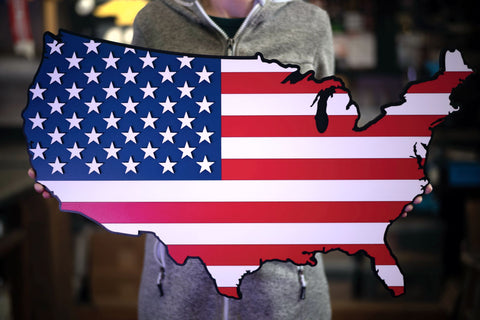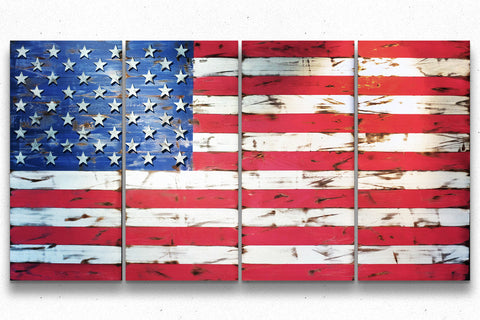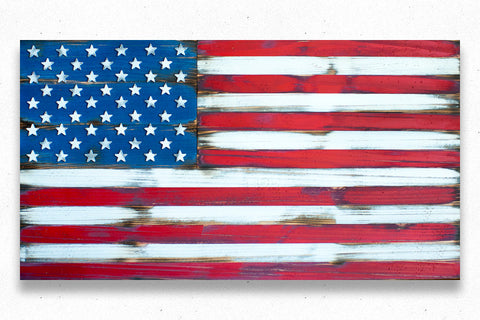
Each year on September 11th, Patriot Day is observed in the United States to remember the 2,977 people killed during the terrorist attacks in New York City, Washington, DC and in the fields outside of Shanksville, Pennsylvania.
Patriot Day
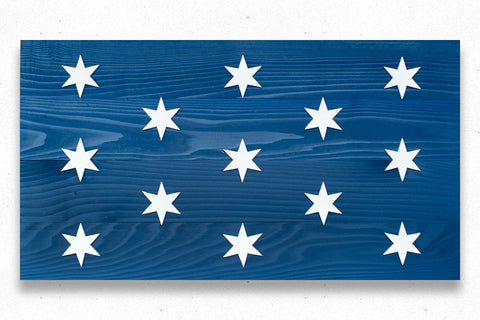
The Remarkable Story of an Early American Symbol: The Serapis Flag
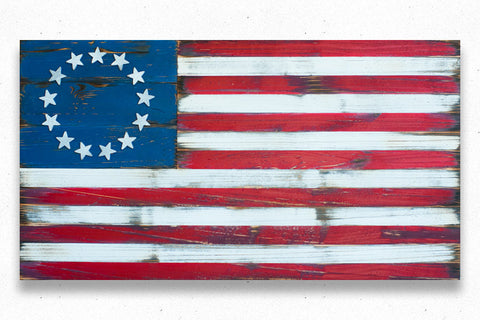
At a time in American history where no national flag yet existed, the Serapis flag was one of the first recognized symbols of the United States. Its name comes from the HMS Serapis, one of many ships in the Royal Navy named after the Greek god, Serapis. She was a beast—considered fifth rate, sported two-decks, and boasted 44 guns (twenty 18-pounders, twenty 9-pounders, and four 6-pounders).
Why We Built the Thin Blue Line Flag
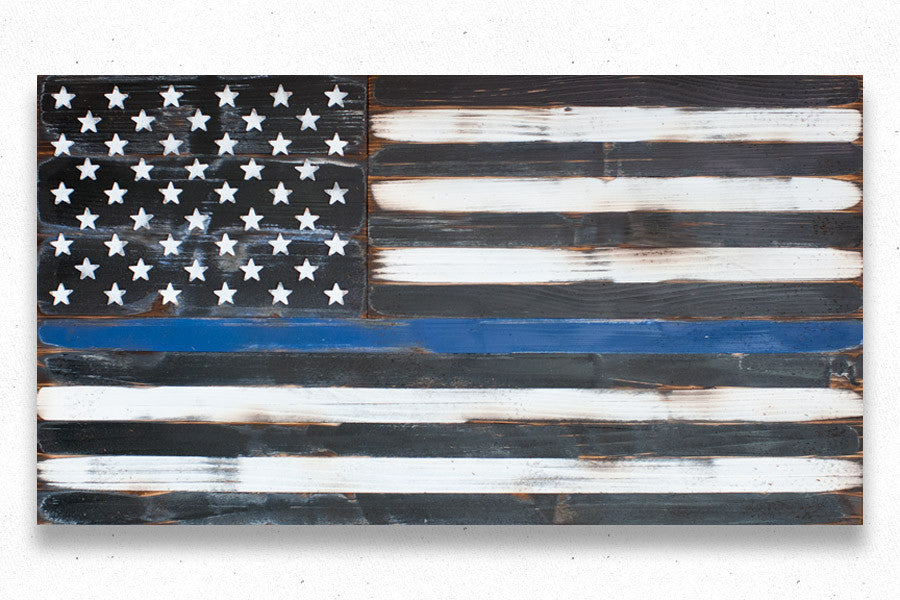
Several months ago, Art Pinney, Patriot Wood’s craftsman, built Patriot Wood’s first Thin Blue Line Wood Flag. This wooden flag combines the Thin Blue Line emblem with the flag of the United States. Used by law enforcement, the Thin Blue Line emblem’s simple design depicts a central, horizontal blue line separating two black lines. Patriot Wood’s Thin Blue Line Wood Flag integrates this emblem into a black-and-white version of the American flag for a beautiful and symbolic combination.
Keep reading to learn what inspired Art to build this flag.
The Flags That Make Up the Union Jack
Few flags are as recognizable as the Union Jack, the national flag of the United Kingdom. We’ve been a fan of this flag for some time, and became even more interested in its history when we created our wooden Union Jack replica.
During our research, we were intrigued by the manner in which the Union Jack represents the four countries of the United Kingdom: England, Scotland, Wales, and Northern Ireland.
The Declaration of Independence
IN CONGRESS, July 4, 1776.
The unanimous Declaration of the thirteen united States of America,
When in the Course of human events, it becomes necessary for one people to dissolve the political bands which have connected them with another, and to assume among the powers of the earth, the separate and equal station to which the Laws of Nature and of Nature's God entitle them, a decent respect to the opinions of mankind requires that they should declare the causes which impel them to the separation.